A quantum classifier that ties a neural net — and why that's the honest result
· quantum, qml, vqc, pennylane, honest-benchmarks, classification
A VQC is a quantum circuit with tunable knobs that learns to sort things — here, to separate two interleaving crescent-moon shapes of dots (the classic two-moons test). We train it exactly like any AI: show it examples, let it guess, measure how wrong it was, nudge the knobs, repeat. Then — and this is the whole honesty engine of the project — we race it against ordinary (classical) methods on the same split. A quantum number is never shown alone.
What we built
A configurable re-uploading VQC (angle embedding, strongly-entangling ansatz, data re-uploading on) trained with Adam on two-moons, 3-seed mean, on the CPU statevector simulator. Beside it — mandatory (D2) — logistic regression and a small MLP on the identical splits.
Results
| model | mean test acc | std | per-seed |
|---|---|---|---|
| re-uploading VQC | 0.978 | 0.006 | 0.973, 0.987, 0.973 |
| logistic regression | 0.853 | 0.000 | 0.853, 0.853, 0.853 |
| MLP (16,16) | 0.978 | — | 0.987, 0.973, 0.973 |
Figures
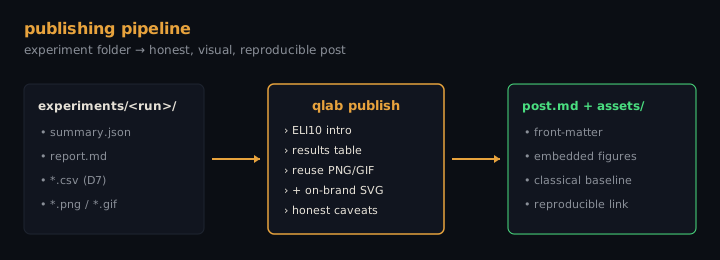
How every QLAB post is built (on-brand, generated): an experiment folder becomes an honest, visual, reproducible post — baseline beside every quantum number, caveats auto-included.
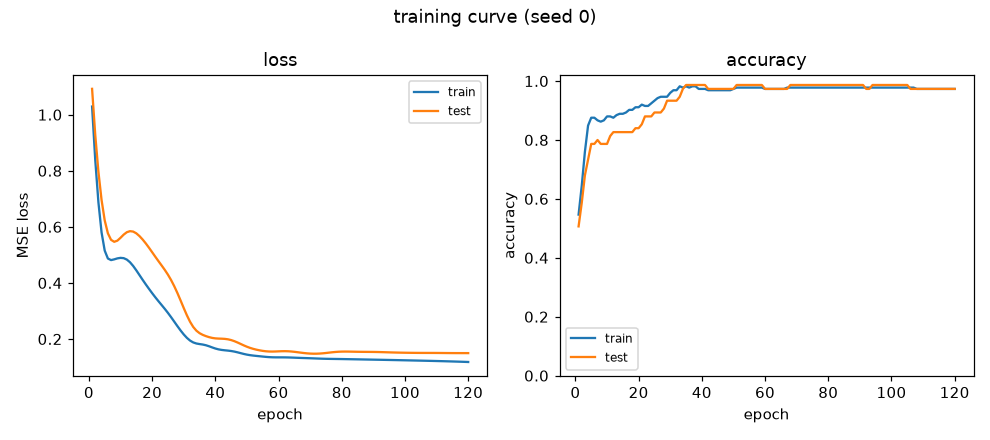
Training curve: loss falling as the circuit’s knobs are tuned over epochs.
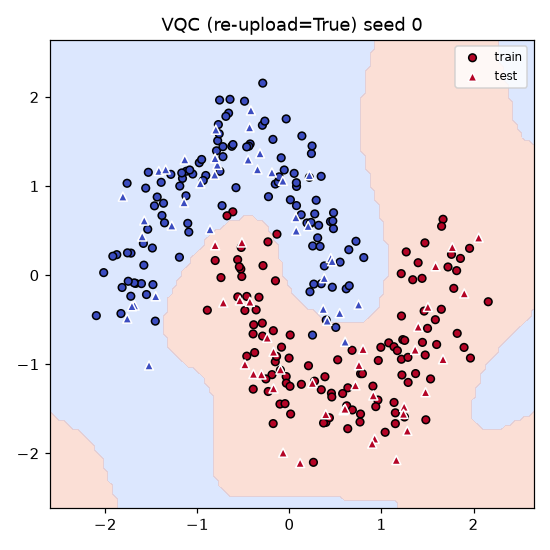
The VQC’s learned decision boundary carving the two crescents apart.
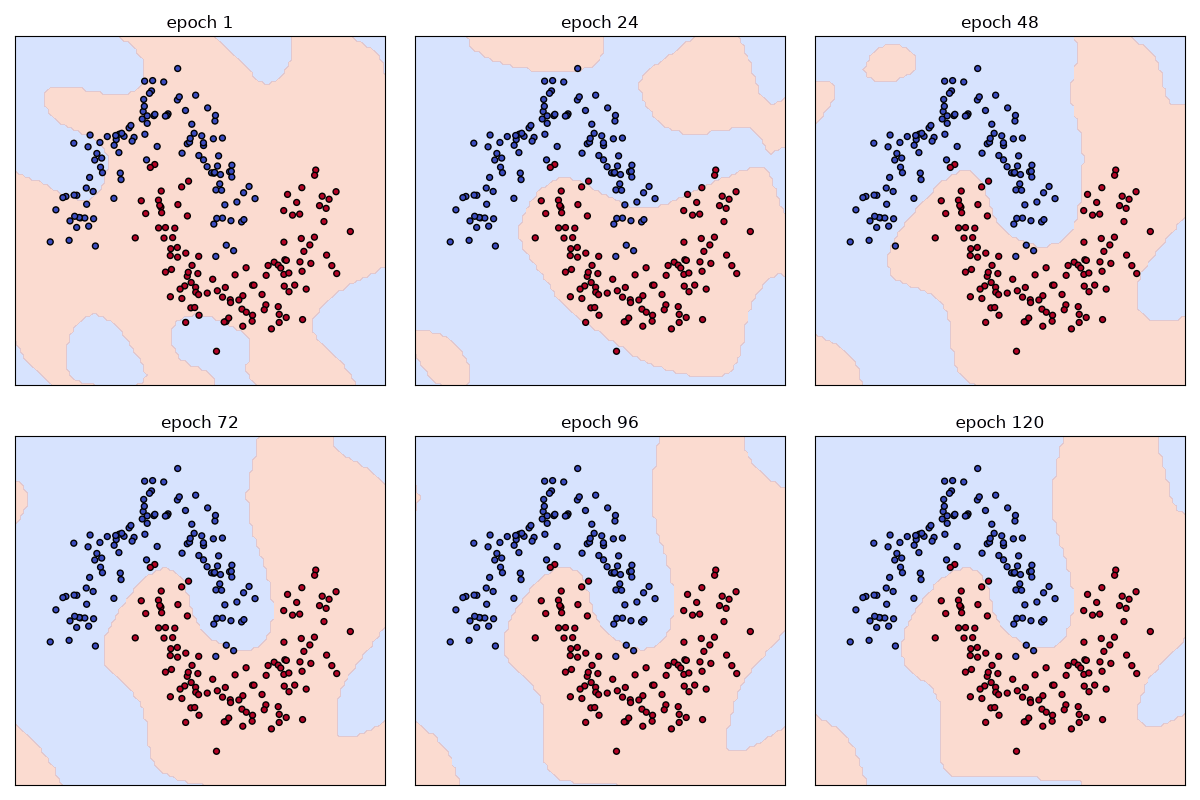
The boundary forming over training — the quantum circuit learning the shape.
Honest caveats
On this run the VQC (0.978) ties the best classical baseline (0.978). Two-moons is a 2-D toy: this shows the framework trains, not quantum advantage.
- Claiming quantum advantage is permanently out of scope (D1) — this is an honest-evaluation portfolio, not a quantum-wins pitch.
- The classical baseline is the credibility engine (D2): the quantum number never ships alone.
- Simulator-only, CPU. Real-hardware columns come later; the classical-simulability audit comes later still.
Reproduce it
Every number above traces to metrics.csv / seed_summary.csv (D7). Config + data + plots: experiments/20260708-105849_two-moons.